
New Admitted
The admission profile for the Bachelor's degree in Business Administration requires the following characteristics:
BASIC KNOWLEDGE OF
- Math.
- Accounting.
- Statistics.
- Information Technologies.
- Reading and writing.
SKILLS
- To organize.
- Identifying problems based on information.
- Analyze and synthesize.
- Issuing personal evaluative judgments.
- Teamwork.
- Flexible in emerging environments.
- Oral and written communication.
- Handling hardware and software.
ATTITUDES
- Commitment.
- Honesty.
- Independence.
- Critical and analytical thinking.
- Empathy.
- Tolerance.
- Proactive.
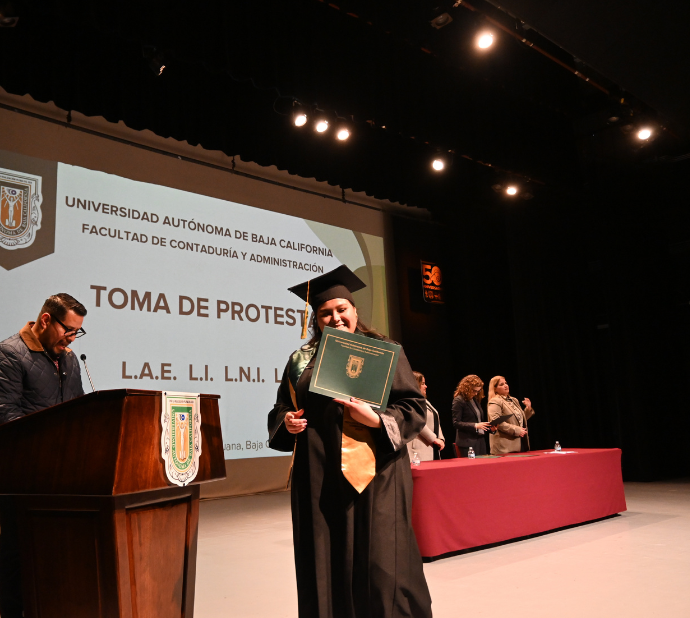
Graduate
El egresado del programa educativo de Licenciatura en Administración de Empresas se caracteriza por su sólida formación y avanzados conocimientos en materia de administración, lo que le permite desarrollar sus actitudes, habilidades y destrezas. Tiene capacidad para tomar decisiones, ejercer el liderazgo con un sentido de responsabilidad ética y social, participar y promocionar procesos de transformación, con una amplia visión de las exigencias de un contexto globalizado y cambiante, en beneficio de la organización.
The Bachelor in Business Administration will be competent to:
-
Design business strategies by applying the administrative process in the functional areas of organizations to maximize their efficiency and competitiveness, with critical thinking and ethics.
-
Manage public and private organizations, both for-profit and non-profit, at the regional-cross-border, national, and international levels to address the economic, political, and social issues and needs of the global environment, based on the regulations and processes that govern them, with social responsibility.
-
Develop and implement models and business plans that promote the creation of companies within a framework of creativity, innovation, and social commitment that contribute to local and national economic growth and development, with enthusiasm and a proactive attitude.
- Make strategic decisions through the use of information systems and emerging technologies to make processes within an organization more efficient and effective, with responsibility and critical thinking.

Occupational Field
The professional profile of the Bachelor’s Degree in Business Administration can perform in local, state, national, and international areas, carrying out activities in the following sectors:
PUBLIC INSTITUTIONS
In dependencies and entities that are part of the federal, state, parastatal, and municipal public administration in activities of:
- Administration.
- Human Resources.
- Finance.
- Public relations.
- Implementation and evaluation of administrative systems.
- Auditor administrativo.
PRIVATE INSTITUTIONS
In entities of the industrial, commercial, and service sectors, in the areas of:
- Administration.
- Human Talent.
- Finance.
- Marketing.
- Operations.
FREE EXERCISE OF HIS PROFESSION
- Advisory and consulting in administrative areas.
- Training and development.
- Coaching.
- Entrepreneurship and development of new businesses.
- Preparation of investment projects.
- Advisory for Startups.
- Entrepreneurship and management of family businesses.
Educational Plan

Basic Stage
This stage establishes the foundations of the educational program and includes a set of general, multidisciplinary learning units with a predominantly formative orientation. It provides students with the contextual, methodological, and instrumental bases essential for the administrative field, necessary for understanding the origin and placement of learning units in the disciplinary stage. This stage supports the integration of a common core, consisting of a set of learning units from a group of related careers within the same knowledge area.
Competence
Analyze the basic concepts of different areas of administrative sciences through theoretical and methodological principles, fostering comprehensive training in students that allows them to engage in the administrative processes of organizations with a collaborative spirit and a strong sense of responsibility in business.

Disciplinary Stage
The student will acquire theoretical, methodological, and technical knowledge specific to Administration, oriented towards a generic learning for professional practice. Additionally, this includes the development of transferable generic competencies applicable to common professional performances within a specific occupational field.
Competence
Develop information systems using international quality standards in engineering. Apply theoretical and methodological concepts involved in the development of various organizational resources through the use of administrative techniques and tools, with the aim of creating a general understanding of business structure and management in the student, thus complementing their comprehensive training.

Terminal Stage
Specific knowledge is reinforced and applied in an integrated manner, increasing practical work, and culminating with the development of professional competencies needed to enter the occupational field, generate alternatives, and solve problems.
Competence
Implement administrative plans and strategies, apply management systems, interpret financial information, and assess the market using administrative techniques and tools to enhance organizational processes. This allows for increased competitiveness with a sense of social responsibility.
Curriculum Maps


LAE Experience
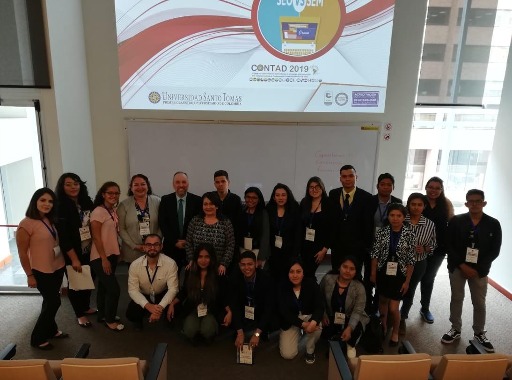
CONTAD 2019 Congress
Latin America United, students from different institutions united in the CONTAD 2019 Congress, of which the FCA was a participant.
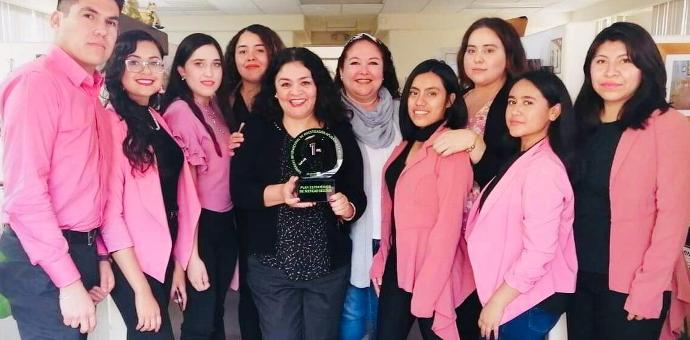
International Congress 2019
Winning students of the First Place in the International Congress of Research Applied to Marketing together with the career coordinator Dr. Blanca Bernal Escoto and Dr. Carolina Bustos Osuna advisor to the winning team.
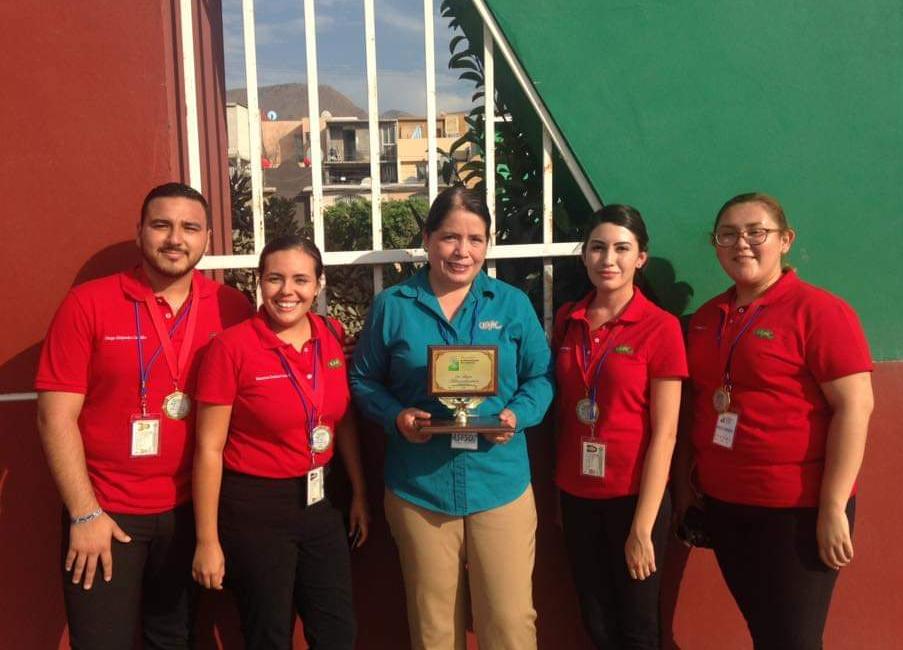
ANFECA Marathon 2017
FCA students winners of the Second Place in the National Marathon of knowledge in Administration ANFECA, in charge of Dr. María Marcela Solís Quintero.
Learn more
Quality Indicators

Coordination
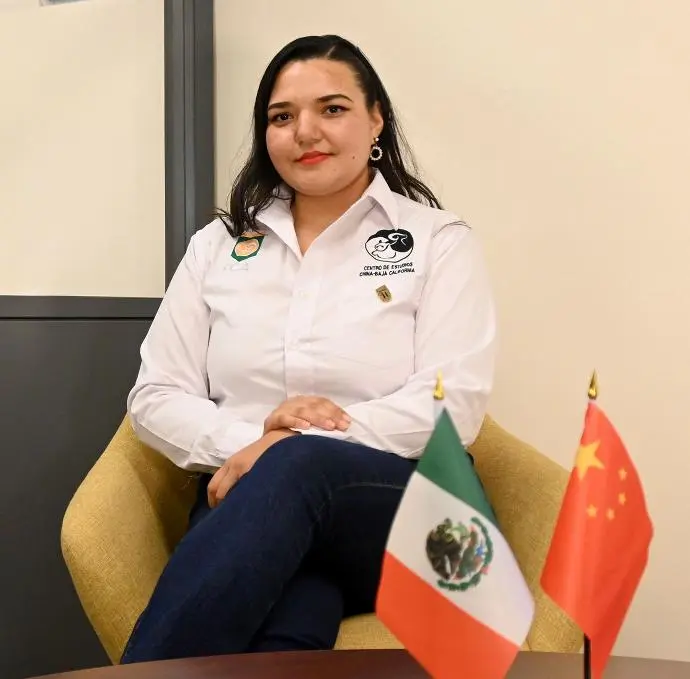
PhD. Carolina Zayas Márquez
- LAE Coordinator
- Ext. 55044
- Email: lae.fcatij@uabc.edu.mx

PhD. Karen Gardenia Ramos Higuera
- Marketing Area Coordinator
- Ext. 55124
- Email: karen.ramos38@uabc.edu.mx

PhD. Virginia Flores Ortiz
- Human Resources Area Coordinator
- Ext. 55102
- Email: vflores@uabc.edu.mx

Dr. Marcela Solís Quintero
- Coordinator of the Operations Administration Area
- Ext. 55047
- Email: marcela.solis@uabc.edu.mx

Mstra. María Guadalupe Beltrán Soto
- Coordinator of the Basic Administration Area
- Ext. 55080
- Email: areaadministracionbasica.fcatij@uabc.edu.mx

PhD. Carlos Alberto Flores Sánchez
- Coordinator of the Entrepreneurship and Business Support Area
- Correo: cflores@uabc.edu.mx